
Sound Control Built Into Your Ceilings
Acoustic ceiling installation in Lewiston for basements, offices, and multi-use spaces requiring noise reduction and improved acoustics
Footsteps echo loudly in unfinished basements, voices carry between rooms in open-plan spaces, and mechanical noise from ductwork or plumbing travels through hard surfaces that reflect rather than absorb sound. Acoustic ceiling installation addresses these problems by suspending sound-absorbing tiles in a metal grid system that reduces noise transmission and dampens reverberation. The Sheetrock Whisperer installs acoustic ceilings in Lewiston homes and commercial spaces, creating environments where conversation remains clear without shouting, background noise drops noticeably, and rooms feel more comfortable for their intended use.
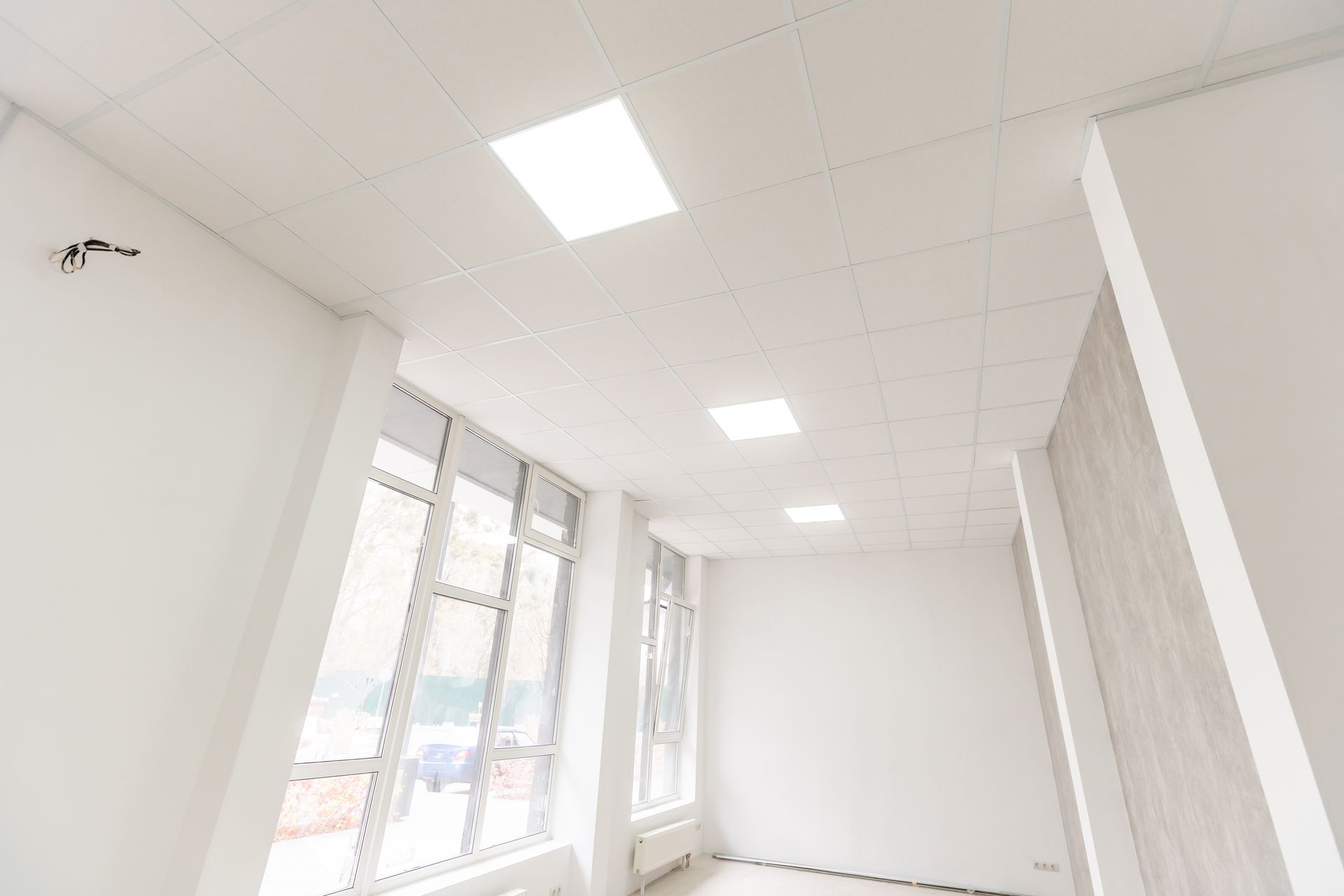
The process begins with measuring ceiling dimensions and locating joists or structural supports for grid attachment, then installing perimeter molding and main runners that create the framework. Cross tees snap into runners at precise intervals, forming openings sized to hold ceiling tiles. Each tile drops into place from below, resting on the grid flanges while remaining accessible for removal if you need to reach wiring, plumbing, or ductwork hidden above.
Arrange a project estimate to review ceiling height requirements, tile options, and acoustic performance targets for your space.
What Acoustic Ceilings Actually Accomplish
Acoustic tiles contain porous materials that trap sound waves rather than reflecting them back into the room. Grid systems allow air circulation while concealing utilities, and the suspended design creates a buffer zone between occupied space and structural ceilings that carry impact noise from floors above. Installation requires level grid alignment—sagging or twisted runners become obvious once tiles are placed, and uneven sections make the entire ceiling look unprofessional.
After installation, you'll notice conversations stay contained within rooms instead of carrying throughout the building, and hard surfaces like concrete floors no longer create the echo effect that makes spaces feel harsh. Music or television audio becomes clearer because reflected sound doesn't muddy the direct sound from speakers. Rooms feel quieter overall even when occupied, reducing the fatigue that comes from constant low-level noise exposure in reverberant environments.
Acoustic ceilings also hide wiring, ductwork, and plumbing that would otherwise remain exposed in basements or commercial build-outs, while maintaining easy access for repairs or modifications—simply lift out tiles in the affected area rather than cutting through drywall. The grid system accommodates recessed lighting, HVAC diffusers, and sprinkler heads without custom framing. Tiles resist sagging and maintain their appearance for years with minimal maintenance beyond occasional cleaning to remove dust accumulation.
Common Questions About This Service
Homeowners and business owners considering acoustic ceilings want to understand performance, maintenance, and installation logistics before committing to the project.
What minimum ceiling height works for acoustic grid installation?
Most systems require at least three to four inches of clearance below joists for grid and tile installation, meaning rooms with seven-foot-six-inch finished ceiling height need starting heights near eight feet to accommodate the system.
How much noise reduction do acoustic ceilings provide?
Tiles typically reduce reflected sound by fifty to seventy percent compared to hard drywall or concrete ceilings, with specific performance varying based on tile density, thickness, and the air gap between tiles and the structural ceiling above.
When should you choose acoustic ceilings over drywall in Lewiston basements?
Spaces requiring frequent utility access, areas with noise control priorities, or projects where budget constraints favor the faster installation and lower material costs of grid systems benefit most from acoustic ceilings.
Why do some tiles look different after several years?
Moisture exposure, temperature fluctuations, and airborne contaminants can discolor tiles over time, though quality tiles resist these effects better—basement installations in humid Lewiston summers may see faster aging than climate-controlled commercial spaces.
What happens if a tile gets damaged?
Individual tiles lift out of the grid and replace in seconds without tools, making damage repair far simpler than cutting and patching drywall—keeping a few spare tiles from the original installation ensures perfect color and texture matching years later.
The Sheetrock Whisperer handles grid layout to avoid awkward partial tiles at room edges and coordinates utility placement for clean, professional integration with lighting and HVAC systems. Contact us to schedule acoustic ceiling installation in Lewiston and create spaces with measurably better sound control and visual finish.