
Overhead Surfaces Without Sags or Stains
Ceiling Repair and Replacement in Lewiston for damaged areas that compromise appearance and structural integrity
Ceilings sag when fasteners pull loose from joists, water damage weakens the gypsum core, or age degrades the bond between paper facing and the panel interior. You notice the problem as visible deflection between framing members, discolored patches where moisture penetrated, or cracks radiating from stress points. The Sheetrock Whisperer addresses ceiling damage in Lewiston through selective repair when damage remains localized, or full replacement when deterioration extends across multiple panels or compromise affects structural attachment.
Repair work begins by identifying the damage source—active leaks require plumbing or roofing correction before drywall work starts, since installing new material under ongoing moisture intrusion just delays the next failure. Damaged sections are cut back to the nearest joists, providing solid backing for new panel edges, and replacement pieces are fitted and secured with appropriate fastener spacing for overhead application. When existing textures need matching, samples guide the recreation process so patched areas blend with surrounding surfaces.
Arrange an inspection to assess whether localized repair or full ceiling replacement suits your damage pattern.
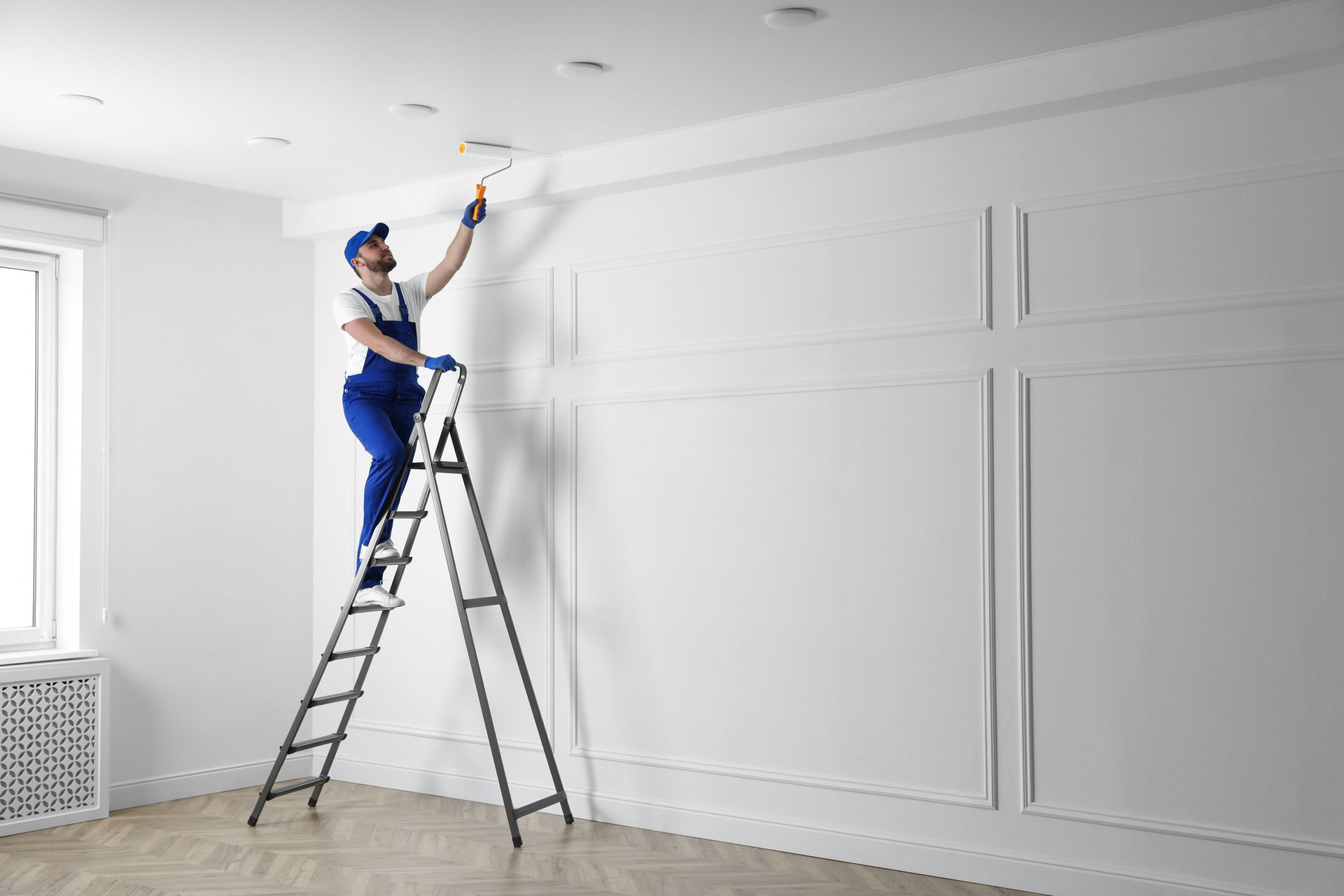
Why Some Damage Requires Full Replacement
Localized repairs work when damage affects defined areas with clear boundaries, but widespread problems make full replacement more practical. Water stains that cover large sections indicate saturation that often extends beyond visible discoloration, weakening areas that still look intact. Sagging across multiple joist bays suggests systemic fastener failure or framing movement that will continue causing problems even after patching isolated spots.
After ceiling work completes, you see flat overhead planes that follow the joist line without deflection, uniform color without staining, and texture that matches across the entire surface rather than showing patch boundaries. Rooms feel taller and cleaner when ceilings present consistent surfaces, and lighting distributes more evenly without shadows collecting in sagged sections. The change is particularly noticeable in rooms where you spend time looking upward—bedrooms, living areas with recessed lighting, and kitchens where ceiling-mounted fixtures highlight surface conditions.
Full replacement allows for insulation upgrades, recessed lighting installation, and correction of outdated textures like heavy popcorn finishes that collect dust and darken over time. The process includes proper ventilation consideration for bathrooms and kitchens, where moisture management prevents the damage patterns that necessitated the original repair. Replacement also addresses ceiling height irregularities caused by settling or previous amateur repairs that built up compound excessively.
Common Questions About Ceiling Projects
Property owners considering ceiling work in Lewiston typically want to know about these aspects of the process.
What indicates that sagging will continue even after repair?
Progressive sagging typically means fasteners are pulling through weakened drywall rather than just loosening, or that framing deflection exceeds normal tolerances, both conditions that affect areas beyond the visible sag and will spread to adjacent sections unless the entire ceiling is replaced with proper fastening.
How do you match existing ceiling textures during repair?
Texture matching involves analyzing the spray pattern, aggregate size, and application technique of the existing finish, then replicating it using similar equipment and materials on test sections until the visual transition between old and new becomes imperceptible under normal room lighting.
Why does water damage sometimes extend beyond visible staining?
Gypsum drywall wicks moisture through its porous core, spreading saturation several feet beyond the stain perimeter, and the paper facing can hide interior deterioration until the material loses enough structural integrity to sag or crumble, making the visible stain an unreliable indicator of total damage extent.
What preparation does ceiling replacement require in occupied homes?
Ceiling work generates significant dust and debris that falls directly downward, requiring complete furniture removal or heavy plastic sheeting coverage, sealing of doorways to contain particulates, and often temporary relocation of occupants from rooms directly below the work area during demolition and sanding phases.
When should full replacement be chosen over patching?
Full replacement makes sense when damage covers more than thirty percent of the ceiling area, when multiple separate damage sites suggest systemic problems, when outdated textures need updating throughout for visual consistency, or when the ceiling height and framing allow for upgrades that improve long-term performance.
The Sheetrock Whisperer evaluates ceiling damage to determine the most effective repair approach for your situation. Contact the office to schedule a damage assessment at your property.