
Lower Levels Converted Into Finished Living Space
Basement Drywall Installation in Lewiston for turning foundation-walled storage areas into rooms suitable for daily occupation
Most Lewiston homes include unfinished basements where foundation walls, exposed joists, and utilitarian concrete floors define the space. Installing drywall transforms these areas into conditioned rooms that function as home offices, entertainment spaces, guest bedrooms, or rental units that add both usable square footage and property value. The process differs from upper-floor installation because basements face moisture challenges from ground contact, require insulation strategies that account for below-grade conditions, and often need furring or framing to create flat wall surfaces over irregular foundation walls.
Basement drywall installation begins with addressing moisture sources, since even minor foundation seepage or condensation will eventually damage wall surfaces. This often means confirming that exterior drainage moves water away from the foundation, that sump pumps function properly, and that humidity levels remain controlled through ventilation or dehumidification. Framing goes up against foundation walls using pressure-treated lumber at the bottom plate where concrete contact occurs, and insulation fills the stud bays before drywall installation provides the finished interior surface.
Schedule a basement evaluation to identify moisture conditions and framing requirements before drywall work begins.
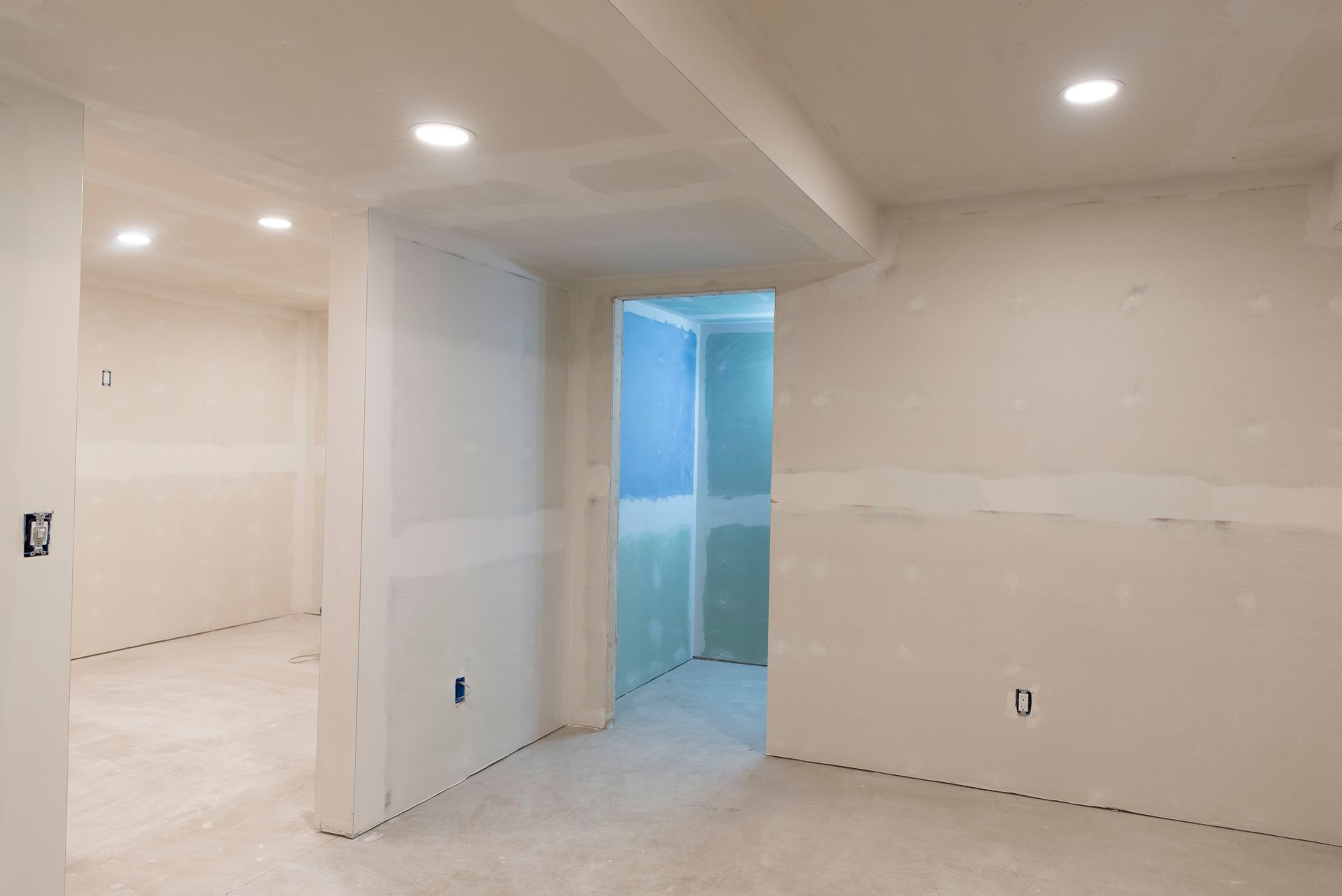
How Below-Grade Conditions Affect Installation Approach
Basements in Lewiston experience temperature differentials that create condensation risk, particularly during humid summer months when warm air contacts cool foundation walls. Standard drywall installation without proper vapor management can trap moisture within wall cavities, leading to mold growth and material deterioration. The Sheetrock Whisperer uses installation methods that account for these conditions, including appropriate insulation types that don't absorb moisture, proper vapor barrier placement, and in some cases, mold-resistant drywall products for areas with persistent humidity concerns.
After basement finishing, you notice the space feels like upper-floor rooms rather than utilitarian storage—walls are smooth and paintable, corners are square and clean, and the area maintains comfortable temperatures year-round rather than feeling damp and cold. The finished surfaces allow for normal furniture placement, wall-mounted fixtures, and decorative treatments that make the basement indistinguishable from main-floor living areas. Sound transmission decreases as insulated, drywalled walls replace open stud bays that previously allowed noise to travel freely between basement zones.
Basement projects often involve coordination with electrical and HVAC work, since finishing creates opportunities to add lighting, outlets, and climate control that make the space genuinely functional. Drywall installation typically follows these rough-in phases, covering the infrastructure while providing access points where needed. Ceiling choices matter significantly in basements—drywall ceilings offer a finished appearance and sound control, while dropped ceilings maintain access to utilities but reduce headroom in spaces that often have limited clearance already.
Questions Before Starting Your Basement Project
These considerations come up regularly when homeowners in Lewiston plan basement finishing work.
What moisture testing should happen before basement drywall installation?
Effective moisture testing involves taping plastic sheets to foundation walls and checking for condensation after 24 hours, using moisture meters on concrete to detect elevated readings that indicate ongoing water intrusion, and monitoring basement humidity levels across seasonal changes to confirm conditions stay below thresholds where mold grows on organic materials.
How does insulation placement differ in basements compared to above-grade walls?
Basement insulation typically goes on the interior side of foundation walls rather than the exterior, requiring careful vapor barrier placement to prevent warm interior air from reaching cold concrete surfaces where condensation forms, and often uses foam products that resist moisture absorption better than fiberglass batts.
Why do some basement walls use furring strips instead of full stud framing?
Furring strips—thin wood strips attached directly to foundation walls—create a shallow cavity for minimal insulation and drywall attachment while preserving headroom and floor space, working well when foundation walls are relatively flat and when deep insulation isn't required, though they provide less room for utilities and insulation compared to full 2x4 framing.
What ceiling height makes basement finishing practical?
Most building codes require 7-foot minimum ceiling height in habitable rooms, but practical comfort suggests 7.5 feet or more, particularly when accounting for the thickness lost to drywall ceilings or dropped ceiling systems, meaning basements with joists lower than 7 feet 6 inches often face height constraints that limit finishing options.
When does basement finishing require egress window installation?
Building codes typically require egress windows in basement bedrooms to provide emergency escape routes, with specific size and height requirements that often necessitate window well excavation and foundation cutting, work that should be completed before interior finishing begins to avoid damaging new drywall during the structural modifications.
The Sheetrock Whisperer handles basement drywall installation with attention to the moisture and structural considerations that affect below-grade spaces. Set up a consultation to discuss your basement finishing plans and timeline.